


Blog
History and extraction process of HPHT lab grown diamond
01 Jul 2025
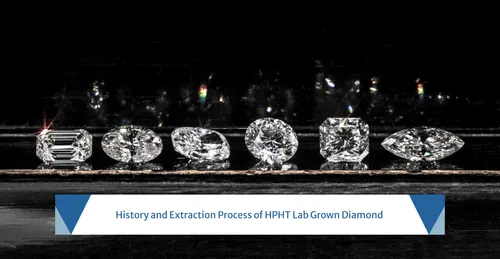
Diamonds are a symbol of luxury, love, and strength. But diamond making is no longer a process deeply embedded in the earth. With the advent of modern science, the HPHT method has transformed the process of diamond making in a lab. This blog will take you on a fascinating excursion into the history of HPHT diamonds from their groundbreaking discovery in the 1950s to their modern-day incarnation as ethical, sustainable gems.
Next, we will glance at the extraction process that turns carbon into a dazzling lab-grown masterpiece. Just think of science, sparkle, and a sustainable lifestyle. They will be with you on this journey.
History of HPHT Lab Grown Diamonds
HPHT diamonds trace their origins to the mid-20th century, out of scientific curiosity and an industrial need. Here's a brief look at history of Lab Grown Diamonds in India:
In 1954, General Electric produced the first HPHT synthetic diamond under extreme pressure and high temperatures to simulate the natural environment in which diamonds form. These small diamonds, considered industrial grade, were used in cutting, grinding, and drilling.
Between the 1960s and 1980s, Swedish, Russian, and Chinese companies tried to refine the HPHT process for making diamonds with greater consistency for industrial purposes.
In the 1990s and 2000s, technological advancements have enabled the manufacturing of gem-quality HPHT diamonds, which can hardly be distinguished from the natural ones, now commercialized by firms like Apollo Diamond and Gemesis.
HPHT diamonds are an ethical and sustainable alternative to mined diamonds, which are now widely available in the jewelry trade. They can also be used for color enhancement of natural and CVD diamonds and are the other one of the two main types of lab-grown diamonds.
Process Of Extracting HPHT Diamonds
The High Pressure High Temperature (HPHT) method is one that simulates the natural conditions deep in the Earth where real diamonds are formed. The process basically includes preparing a carbon source, usually graphite, and placing a diamond seed within it for crystal growth.
The materials are placed inside the HPHT press and subjected to very high pressure and temperature, somewhat mimicking conditions found in Earth's mantle. Over days or even weeks, carbon atoms will arrange themselves on the seed crystal, thereby growing into a larger diamond.
The cell is gradually cooled to stabilize the crystal structure, and the newly formed diamond is extracted from the metal flux and surrounding material.
After which, the rough diamond undergoes several acid bath cleans, is graded, and then cut and polished for jewelry or industrial use.
Benefits of HPHT Diamonds
1. Cost effectiveness
The biggest advantage that HPHT diamonds have over natural diamonds is cost. Bigger diamonds of high purity are prepared in the controlled environment of laboratories, so that consumers get a cheaper diamond alternative, preserving its value and aesthetics, of course. Consumers can purchase the finest top-grade lab-grown diamonds at nearly 30-40% less compared to their mined counterparts.
2. Enhanced clarity
Natural diamonds may contain internal inclusions or blemishes. Laboratory diamonds, being created through controlled process laboratories, can use the HPHT technology to remove or at least minimize such imperfections, resulting in a higher clarity rating of these diamonds. This process can manufacture flawless and nearly flawless diamonds to meet the demand for premium quality lab grown diamonds.
3. Size and carat weight
Mined diamonds tend to be smaller in size and carat weight. Bigger diamonds from the earth are rare and expensive. HPHT diamonds can conversely be synthesized to any large size and carat weight. Customers can have their lab-grown diamonds manufactured within their budget and according to their desires.
4. Color enhancement
HPHT technology provides the facility for the color enhancement of diamonds. An additional one could say that it improves and changes "by subjecting lab-created diamonds with certain impurities to special conditions," Their color. In colors where it particularly succeeded in benefiting its production, this process really shines.
5. Environmentally friendly
The HPHT diamond process is run under controlled laboratory conditions, thus minimizing the environmental damage caused by the mining of diamonds in the traditional method. Engineered diamonds eliminate the need for extensive land excavation and minimize the carbon footprint, aligning with the growing global emphasis on sustainability.
Conclusion
In conclusion, HPHT diamond growing technology did not just drastically transform the diamond trade; it also generated the advantages discussed above for consumers. As time goes by, HPHT diamonds would arguably begin occupying such an important place in customer demands for value and quality in the purchase of diamonds.
FAQ's
1. What are the factors contributing to the expansion of the HPHT diamond market?
The factors influencing the growth of the HPHT diamond market and growth include its application in the jewelry segment, machine tools, thermal applications, and electrochemical applications, among others.
2. How long does it take to manufacture HPHT lab diamonds?
It requires roughly a week to produce an average size diamond suitable for jewelry. Lab grown diamonds smaller in size may only take 2 to 3 days.
3. What are the other processes to create lab diamonds apart from the HPHT technique?
The other popular process to produce engineered diamonds is the chemical vapor deposition method, also referred to as CVD, short form.
4. How large is the HPHT and CVD lab grown diamond market?
The worldwide loose lab-grown diamond market was worth USD 10.8 billion in 2022 and is anticipated to grow at a CAGR of 6.7% from 2023 to 2032. The market is expected to grow to USD 20.6 billion by 2032.
Explore diamonds available through the Lumex marketplace.
Use the catalogue filters and individual diamond details to compare current availability, specifications, grading information and prices.
FEATURES FOR BUYERS
 User friendly search filters
- Memo access where enabled for an approved account
- Current prices and available promotions
- Registration terms for each account type
- Credit access where separately approved
- Grading-report details when listed for a diamond